
Super Duplex Steel Plates

- PRODUCT DETAIL
Super Duplex Steel Plates
Description
Super Duplex Steel Plates are high strength stainless steel plates designed for highly corrosive environments and demanding industrial applications. Super Duplex Steel Plates combine the advantages of both austenitic and ferritic stainless steels, providing excellent corrosion resistance, high mechanical strength and good resistance to stress corrosion cracking. Super Duplex Steel Plates are widely used in offshore platforms, oil & gas pipelines, desalination plants, petrochemical plants and marine environments where conventional stainless steel materials are not sufficient.
Commonly supplied for pressure vessels, heat exchangers, storage tanks, structural components and heavy industrial equipment. In many EPC projects, Super Duplex Steel Plates are supplied together with stainless steel pipes, flanges and fittings as part of integrated piping and structural material supply packages.
Specifications / Standards
Manufactured according to international stainless steel plate standards and project specifications. Chemical composition, mechanical properties, corrosion resistance and testing requirements are controlled according to applicable standards.
Common standards include:
• ASTM A240
• ASTM A480
• EN 10088
• EN 10204
• NACE MR0175 / ISO 15156
• ASME Boiler and Pressure Vessel Code
Typically supplied with EN 10204 3.1 certification or 3.2 certification with third-party inspection when required for offshore and oil & gas projects. Super Duplex Steel Plates may also be supplied together with butt weld pipe fittings and duplex piping materials for corrosion resistant piping systems.
Material Grades
Super Duplex Steel Plates are available in several material grades depending on project requirements and corrosion environments.
Common grades include:
• UNS S32750 (Super Duplex F53)
• UNS S32760 (Super Duplex F55)
• 1.4410
• 1.4501
Super Duplex Steel Plates offer excellent resistance to pitting corrosion, crevice corrosion and chloride stress corrosion cracking. These materials are particularly suitable for seawater systems, offshore platforms, chemical processing plants and desalination facilities.
Material selection is normally based on corrosion conditions, temperature, pressure and project specifications.
S32750(2507) and S32760 Super Duplex steel plates Chemical Composition:
| Grade | C≤ | Mn≤ | P≤ | S≤ | Si≤ | Ni | Cr | Mo | N | Cu |
| S32750 | 0.03 | 1.2 | 0.035 | 0.02 | 0.8 | 6.0-8.0 | 24.0-26.0 | 3.0-5.0 | 0.24-0.32 | 0.5 |
| S32760 | 0.05 | 1.0 | 0.03 | 0.01 | 1.0 | 6.0-8.0 | 24.0-26.0 | 3.0-4.0 | 0.20-0.30 | 0.5-1.0 |
S32750 and S32760 Duplex steel plates Mechanical Properties:
| Mechanical properties | Tensile, min, ksi[MPa] | Yield, min, ksi[MPa] | Elongation, %(min) | Hardness, HB(max) |
| S32750 | 116 [800] | 80 [550] | 15 | 300 |
| S32760 | 109 [750] | 80 [550] | 25 | 300 |
Size Range
Can be supplied in a wide range of thicknesses, widths and lengths depending on mill production capability and project requirements.
Typical size range includes:
• Thickness: 5 mm to 100 mm
• Width: up to 3000 mm
• Length: up to 12000 mm
• Plate, sheet and cut-to-size plates available
Large thickness Super Duplex Steel Plates are often used for pressure vessels, heat exchangers, offshore structural components and heavy industrial equipment.
Manufacturing Process
Super Duplex Steel Plates are produced by hot rolling processes followed by solution annealing heat treatment and surface finishing. The manufacturing process is strictly controlled to ensure mechanical properties, corrosion resistance and microstructure requirements.
Typical manufacturing process includes:
• Steel making
• Continuous casting
• Hot rolling
• Solution annealing
• Water quenching
• Plate leveling
• Surface finishing
• Cutting to size
• Marking and traceability control
• Final inspection
For project supply, Super Duplex Steel Plates may be supplied together with prefabrication pipe spools and structural components for offshore and industrial projects.
Inspection & Testing
Inspection and testing are performed according to ASTM standards, EN standards and project specifications.
Typical inspection and testing include:
• Visual inspection
• Dimensional inspection
• Chemical composition analysis
• Mechanical testing
• Hardness testing
• Impact testing
• Ultrasonic testing
• PMI (Positive Material Identification)
• Corrosion testing if required
• Third-party inspection
• EN 10204 3.1 / 3.2 certification
Surface: 2B, 2D, BA, NO.1, NO.4, NO.8, 8K, mirror, checkered, embossed, hair line, sandblast, Brush, etching.
Full material traceability can be maintained from steel mill production to final Super Duplex Steel Plates delivery documentation.
9. Applications / Industries
Widely used in industries requiring high strength and corrosion resistant materials, including:
• Offshore Platforms
• Oil & Gas Facilities
• Petrochemical Plants
• Desalination Plants
• Seawater Systems
• Pressure Vessels
• Heat Exchangers
• Chemical Processing Plants
• Power Plants
• Marine Engineering
• Structural Components
Particularly suitable for chloride environments, seawater systems and high pressure industrial equipment.
Packaging & Delivery
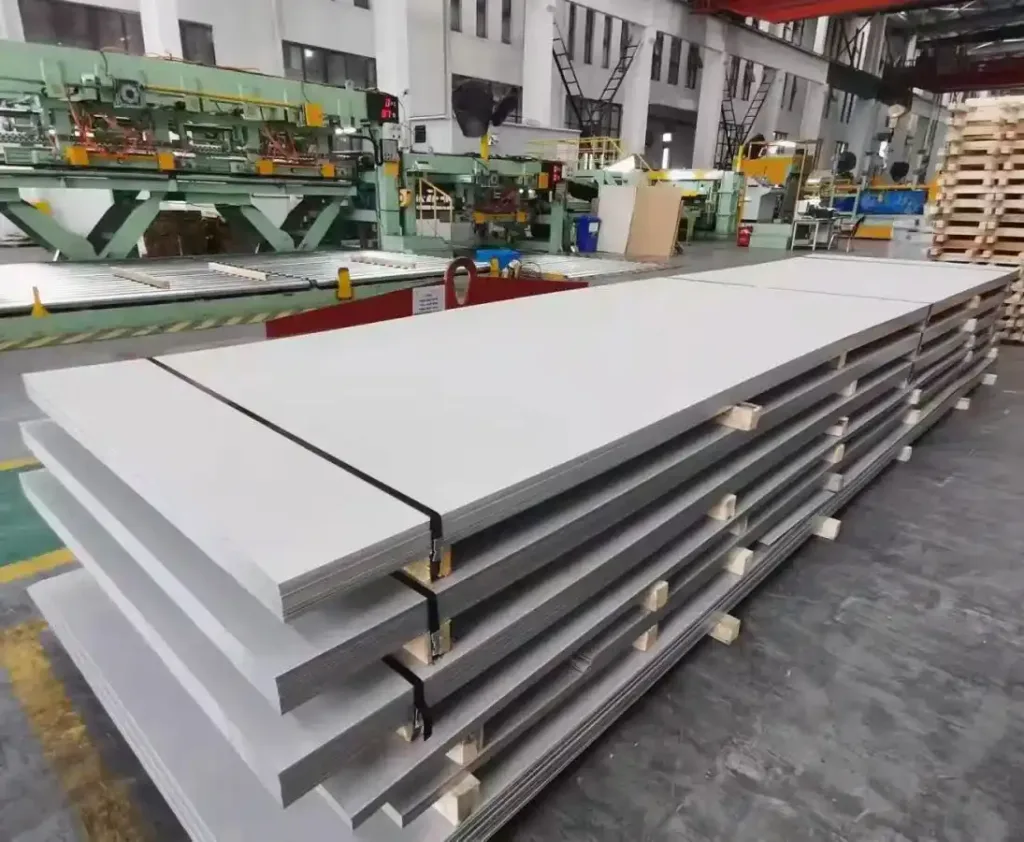
Packed according to international shipping standards to prevent damage during transportation. Plates are usually packed with wooden pallets, steel straps and waterproof wrapping.
Typical shipping documents include:
• Packing list
• Commercial invoice
• Mill test certificates
• Inspection reports
• Certificate of origin if required
Proper marking and traceability are maintained for all Super Duplex Steel Plates supplied for project orders.
Why Choose Us
We supply Super Duplex Steel Plates as part of engineered alloy material supply packages for EPC contractors, project owners and industrial stockists. Our supply scope includes plates, pipes, fittings, flanges, bars and prefabricated piping components manufactured according to international standards and project specifications.
With experience in supplying materials for offshore, oil & gas, petrochemical, LNG, desalination and heavy industrial projects, we understand project documentation requirements, inspection procedures and material traceability systems required by EPC contractors and end users.