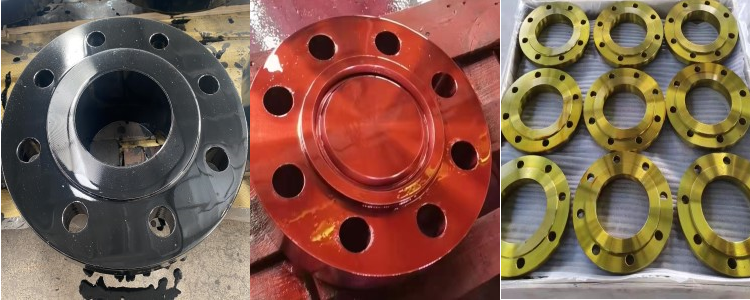
Threaded Flange

- PRODUCT DETAIL
Threaded Flange

Description
Threaded Flange, also known as screwed flange, is used in piping systems where welding is not allowed or where the piping system needs to be dismantled for maintenance. The flange is connected to the pipe through internal threads, eliminating the need for welding and reducing installation work on site.
Commonly used in small diameter, high pressure piping systems, as well as in hazardous environments where welding operations are restricted. They are widely applied in oil & gas facilities, petrochemical plants, water treatment systems and utility piping systems.
In many industrial piping projects, threaded flanges are supplied together with stainless steel pipes and fittings as part of a complete piping material supply package.
Specifications / Standards
Manufactured according to international flange standards and piping specifications. Dimensional tolerances, pressure ratings and thread requirements are controlled according to applicable standards.
Common standards include:
• ASME B16.5
• ASME B16.47
• EN 1092-1
• DIN Standards
• ISO 7005
• MSS SP-44
Thread types are usually NPT or BSPT depending on project requirements and piping specifications.
Inspection and certification can be supplied according to EN 10204 3.1 or EN 10204 3.2 with third-party inspection such as SGS, BV or TÜV when required for EPC projects.
Often supplied together with butt weld pipe fittings and other piping components for integrated piping material procurement.
Material Grades
Are available in carbon steel, stainless steel, duplex stainless steel and nickel alloy materials suitable for various operating conditions and corrosion environments.
Common material grades include:
Carbon Steel
• ASTM A105
• ASTM A350 LF2
Stainless Steel
• ASTM A182 F304 / F304L
• ASTM A182 F316 / F316L
• ASTM A182 F321
• ASTM A182 F347
Duplex Stainless Steel
• ASTM A182 F51 (S31803)
• ASTM A182 F53 (S32750)
Nickel Alloys
• ASTM B564 Alloy 625
• ASTM B564 Alloy 825
• ASTM B564 Alloy C276
Material selection is normally based on temperature, pressure, corrosion conditions and project specifications from EPC contractors or end users.
Size Range
Threaded Flange size range typically includes:
• Size: 1/2” to 4” (commonly used range)
• Pressure Rating: Class 150 / 300 / 600 / 900 / 1500 / 2500
• Facing Type: Raised Face (RF), Flat Face (FF)
• Thread Type: NPT / BSPT
Threaded flanges are generally used for small diameter piping systems, high pressure services and utility piping where welding is not preferred.
Manufacturing Process
Threaded Flanges are typically manufactured from forged materials to ensure mechanical strength and pressure resistance.
Typical manufacturing process includes:
• Raw material inspection
• Cutting and forging
• Heat treatment
• Rough machining
• Finish machining
• Thread machining
• Marking and traceability control
• Final inspection
For project supply, threaded flanges may be supplied together with prefabrication pipe spools and other piping components to reduce installation work and improve project efficiency.
Inspection & Testing
Inspection and testing are carried out according to project specifications and applicable standards.
Typical inspection includes:
• Visual inspection
• Dimensional inspection
• Thread inspection
• PMI (Positive Material Identification)
• Mechanical testing
• Hardness testing
• NDT if required
• Third-party inspection
• EN 10204 3.1 / 3.2 certification
Material traceability from raw material heat number to final flange marking can be maintained for project documentation and quality control requirements.
Applications / Industries
Threaded Flanges are used in various industrial piping systems including:
• Oil & Gas
• Petrochemical Plants
• Power Plants
• Water Treatment Plants
• Utility Systems
• Instrumentation Lines
• Fire Protection Systems
• Compressed Air Systems
• Chemical Plants
• Industrial Facilities
Threaded flanges are particularly suitable for small diameter, high pressure piping systems and applications where welding is not permitted.
Packaging & Delivery
Flanges are packed in wooden cases or pallets suitable for international transportation. Anti-rust oil or protective coating is applied to prevent corrosion during shipment.
Each flange marking typically includes:
• Size
• Pressure rating
• Material grade
• Heat number
• Standard
• Manufacturer identification
Shipping documents include packing list, commercial invoice, mill test certificates and inspection reports.
Why Choose Us
We supply threaded flanges not only as individual flange products but also as part of engineered piping material packages for EPC contractors, project owners and industrial stockists.
With experience in supplying materials for oil & gas, petrochemical, offshore, LNG, power plant and heavy industrial projects, we understand project documentation requirements, inspection procedures and material traceability systems required by EPC contractors and end users
Annex :Threaded Flange Specification:
| Standard | Type | Class | Size |
| ASME B16.5 | Threaded | 150#-900# | 1/2″-24″ |
| 1500# 2500# | 1/2″-2 1/2″ | ||
| DIN2565 | Threaded flange with Neck | PN6 | DN6-DN200 |
| DIN2566 | Threaded flange with Neck | PN16 | DN6-DN150 |
| DIN2567 | Threaded flange with Neck | PN25 PN40 | DN6-DN150 |
| DIN2568 | Threaded flange with Neck | PN64 | DN10-DN150 |
| DIN2569 | Threaded flange with Neck | PN100 | DN10-DN150 |
| JIS B2220 | Welding Flange, Lap joint flange, threaded flange | PN6-PN100 | DN10-DN1500 |
| Sealing Surface | RF FF RTJ TF GF LF LM | ||
| Flange Face Finish | Stock Finish/Spiral Serrated/Concentric Serrated/Smooth Finish(Ra 3.2 and 6.3 micrometers) | ||
| 125-250 AARH(it is called smooth finish) | |||
| 250-500 AARH(it is called stock finish) | |||
| Coating | Vanish, yellow paint, anti-rust oil, galvanizing etc | ||