Pipe Cross
- PRODUCT DETAIL
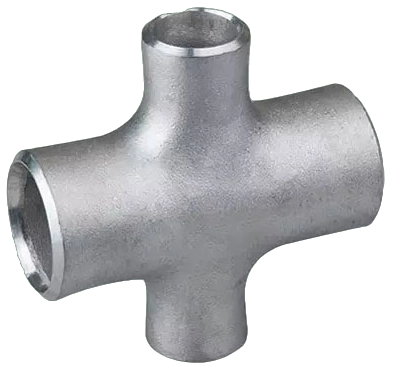
PIPE CROSS – STRAIGHT/EQUAL CROSS, REDUCING CROSS
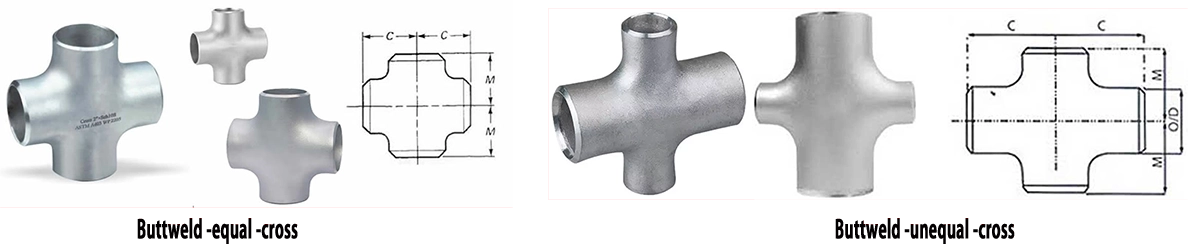
Description
Pipe cross fittings are used to connect four pipes at a single intersection point and are typically installed in piping systems where branch connections are required in multiple directions. Cross fittings are commonly used in process piping systems, utility piping and instrument piping where space constraints or system layout require four-way connections.
In industrial piping systems, pipe crosses are normally used together with butt weld fittings, pipes and pipe flanges to form complete piping assemblies. Compared with tee fittings, pipe crosses introduce higher stress concentrations and therefore are typically used in smaller sizes or reinforced piping systems.
Pipe cross fittings are widely used in petrochemical plants, offshore platforms, refineries, power plants and heavy industrial piping systems.
Specifications / Standards
Pipe cross fittings are manufactured according to international piping standards to ensure dimensional compatibility, welding quality and pressure rating compliance.
Typical standards include:
ASME B16.9 – Factory-Made Butt Welding Fittings
ASME B16.28 – Short Radius Fittings
MSS SP-75 – High Yield Butt Weld Fittings
EN 10253-2 – Butt Weld Fittings for Pressure Purposes
EN 10253-4 – Stainless Steel Butt Weld Fittings
ASTM A234 – Carbon Steel Pipe Fittings
ASTM A403 – Stainless Steel Pipe Fittings
ASTM A815 – Duplex Stainless Steel Pipe Fittings
ASTM B366 – Nickel Alloy Pipe Fittings
EN 10204 – Inspection Certificates
Pipe crosses are often supplied as part of complete piping material packages together with stainless steel pipe fittings and piping materials for EPC and industrial projects.
Material Grades
Pipe cross fittings can be manufactured in carbon steel, stainless steel, duplex stainless steel and nickel alloys depending on corrosion conditions, temperature and pressure requirements.
Carbon Steel
ASTM A234 WPB
ASTM A420 WPL6
Stainless Steel
ASTM A403 WP304 / 304L
ASTM A403 WP316 / 316L
ASTM A403 WP321
ASTM A403 WP347
Duplex & Super Duplex
ASTM A815 UNS S31803
ASTM A815 UNS S32205
ASTM A815 UNS S32750
ASTM A815 UNS S32760
Nickel Alloys
ASTM B366 UNS N06625
ASTM B366 UNS N08825
ASTM B366 UNS N10276
Material grades are selected according to project specifications, corrosion allowance and operating conditions.
Size Range
Typical size range for pipe cross fittings:
Size Range: 1/2″ to 48″
Wall Thickness: SCH 5S – SCH XXS
Types:
Equal Cross
Reducing Cross
Manufacturing Types:
Seamless Cross
Welded Cross
Fabricated Cross
Special sizes and custom cross fittings can be manufactured according to piping isometrics and project drawings.
Manufacturing Process
The manufacturing process for pipe cross fittings typically includes:
Raw material pipe selection
Cutting and preparation
Hot forming / Cold forming
Welding (for fabricated cross)
Heat treatment
Bevel machining
Surface treatment (Pickling / Passivation / Shot blasting)
Marking and traceability identification
Inspection and testing
Packing and shipment
All pipe crosses are fully traceable from raw material heat number to final inspection documentation.
Inspection & Testing
Inspection and testing may include:
Visual inspection
Dimensional inspection
PMI (Positive Material Identification)
Mechanical testing
Hardness testing
Ultrasonic testing (UT)
Dye penetrant testing (PT)
Magnetic particle testing (MT)
Radiography testing (RT) for welded fittings
Hydrostatic testing (if required)
Third-party inspection (SGS / BV / TUV / DNV)
Inspection certificates are available according to EN 10204 3.1 or 3.2.
Applications / Industries
Pipe cross fittings are widely used in industrial piping systems across various industries:
Oil & Gas
Petrochemical
Offshore & FPSO
LNG & Gas Processing
Power Plants
Nuclear Industry
Chemical Plants
Desalination Plants
Shipbuilding
Heavy Industry
Pipe crosses are commonly used in process piping, utility piping systems, cooling water systems and instrument piping systems.
Packaging & Delivery
Pipe cross fittings are packed to prevent damage during transportation and storage.
Typical packing methods include:
Wooden cases
Plywood boxes
Pallets
Waterproof wrapping
End protection
Heat number marking
Packing list and traceability documentation
Export packing is suitable for sea freight, air freight and project site delivery.
Why Choose Us
We supply pipe cross fittings for industrial piping projects with complete material traceability, inspection documentation and project packaging requirements.
Our pipe cross fittings are supplied to EPC contractors, fabrication workshops, offshore projects, petrochemical plants and power plant projects where documentation, quality control and delivery reliability are critical.
We support complete piping material supply including pipes, fittings, flanges, forgings and prefabrication pipe spools, ensuring compatibility between all piping components and project specifications.