
Engineered Alloy Materials for Water Treatment and Desalination Industry
1 Water Treatment and Desalination Industry Overview
Water treatment and desalination plants operate under environments involving seawater, brine with high chloride concentration, treated water, and chemical dosing systems. Desalination plants include seawater intake systems, pretreatment systems, reverse osmosis systems, thermal desalination units, and brine discharge systems. Materials used in these plants must provide corrosion resistance in seawater and brine environments, mechanical strength under high pressure in reverse osmosis systems, and long service life with low maintenance requirements. The selection of Engineered Alloy Materials for Water Treatment and Desalination Industry is therefore critical for ensuring plant reliability and long-term operation.
2 Desalination and Water Treatment Process Systems
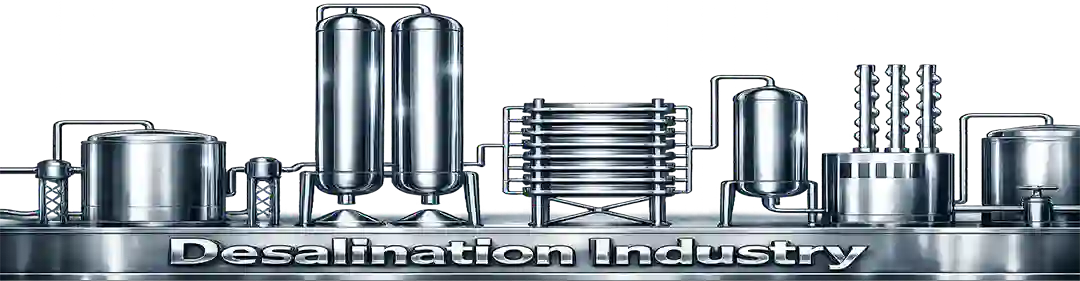
Typical water treatment and desalination systems include seawater intake pipelines, pretreatment filtration systems, reverse osmosis high pressure piping, thermal desalination units such as multi-stage flash and multi-effect distillation systems, heat exchangers, brine discharge pipelines, treated water storage tanks, and distribution pipelines. Pumps, valves, and filtration equipment are also important components in water treatment plants. The selection of Engineered Alloy Materials for Water Treatment and Desalination Industry must consider corrosion resistance, pressure rating, flow velocity, and compatibility with water chemistry and chemical dosing systems.
3 Seawater, Brine and Water Corrosion Environments
Seawater and brine environments contain high chloride concentrations that can cause pitting corrosion, crevice corrosion, and stress corrosion cracking in stainless steels. Biofouling and microbiologically influenced corrosion may occur in seawater intake systems. Erosion corrosion may occur in pipelines with high flow velocity. In thermal desalination systems, elevated temperatures increase corrosion risk in brine environments. The performance of Engineered Alloy Materials for Water Treatment and Desalination Industry must be evaluated based on chloride concentration, temperature, flow conditions, and corrosion resistance.
4 Reverse Osmosis and Thermal Desalination Systems
Reverse osmosis systems operate under high pressure conditions and require materials with high mechanical strength and corrosion resistance. High pressure piping, membrane housings, and pump systems must withstand pressure cycling and chloride environments. Thermal desalination systems such as MSF and MED use heat exchangers, evaporators, and condensers that operate at elevated temperature in saline water environments. The use of Engineered Alloy Materials for Water Treatment and Desalination Industry is essential in these systems to ensure corrosion resistance and mechanical reliability.
5 Material Selection for Desalination Equipment
Material selection for desalination and water treatment equipment is typically based on chloride concentration, temperature, pressure, and flow velocity. Duplex stainless steels are commonly used for seawater intake systems, reverse osmosis high pressure piping, and pump systems. Super duplex stainless steels are used in high chloride and high temperature brine environments. Nickel alloys may be used in heat exchangers and highly corrosive environments. Proper selection of Engineered Alloy Materials for Water Treatment and Desalination Industry improves equipment service life and reduces maintenance costs.
6 Stainless, Duplex and High Alloy Materials for Seawater and Brine Service
Materials commonly used in water treatment and desalination plants include austenitic stainless steels for treated water systems, duplex stainless steels such as S31803 and S32205 for seawater systems, super duplex stainless steels such as S32750 and S32760 for high chloride brine systems, and high alloy stainless steels or nickel alloys for aggressive environments. Material selection is often based on PREN values, chloride concentration, and operating temperature. The selection of Engineered Alloy Materials for Water Treatment and Desalination Industry ensures corrosion resistance and long-term service performance.
7 Fabrication, Welding and Biofouling Considerations
Fabrication and welding procedures are important for corrosion resistant materials used in desalination plants. Weld surfaces must be properly cleaned and passivated to restore corrosion resistance. Smooth internal surfaces are important to reduce biofouling and scaling in water treatment systems. Materials must also be compatible with cathodic protection systems where applicable. Proper fabrication practices are essential for Engineered Alloy Materials for Water Treatment and Desalination Industry applications.
8 Standards and Water Industry Specifications
Materials used in water treatment and desalination plants are manufactured according to ASTM, ASME, EN, and ISO standards. Water industry specifications and project specifications issued by EPC contractors and water authorities may also apply. Materials must comply with pressure piping standards and corrosion resistant material specifications. Compliance with standards ensures that Engineered Alloy Materials for Water Treatment and Desalination Industry meet project requirements and operating conditions.
9 Inspection, Testing and Corrosion Control
Inspection and testing typically include PMI, ultrasonic testing, hydrostatic testing, ferrite testing, dimensional inspection, and corrosion testing where required. Coating inspection and cathodic protection monitoring may also be required for seawater systems. Inspection documentation and traceability are important for desalination projects to ensure material quality and long-term reliability of Engineered Alloy Materials for Water Treatment and Desalination Industry.
10 Water and Desalination Project Material Supply and Logistics
Water and desalination projects often involve large diameter pipelines, long delivery schedules, and international logistics. Material supply requires coordination between mills, inspection agencies, fabrication shops, and EPC contractors. Packaging and preservation are important for marine transportation and site storage. The supply of Engineered Alloy Materials for Water Treatment and Desalination Industry requires integrated supply chain coordination to meet project schedules and technical documentation requirements.