
Engineered Alloy Materials for Heat Exchanger Industry
1 Heat Transfer and Process Conditions
Heat exchangers are widely used in petrochemical plants, chemical processing facilities, power plants, offshore platforms, desalination plants, and industrial process systems. Heat exchanger design is primarily based on heat transfer duty, operating temperature, operating pressure, fluid properties, and corrosion conditions. Materials used in heat exchangers must withstand thermal stress, pressure loading, corrosion, erosion, and fouling conditions over long service periods. The selection of Engineered Alloy Materials for Heat Exchanger Industry is therefore determined by process conditions including temperature, pressure, fluid composition, flow velocity, and maintenance requirements.
Heat exchangers may operate under condensing, evaporating, cooling, or heating conditions. Thermal cycling and temperature gradients may cause thermal fatigue and expansion stress. Material selection must consider thermal expansion compatibility between tubes, tube sheets, and shells to avoid mechanical stress and leakage problems.
2 Heat Exchanger Types and Design Considerations
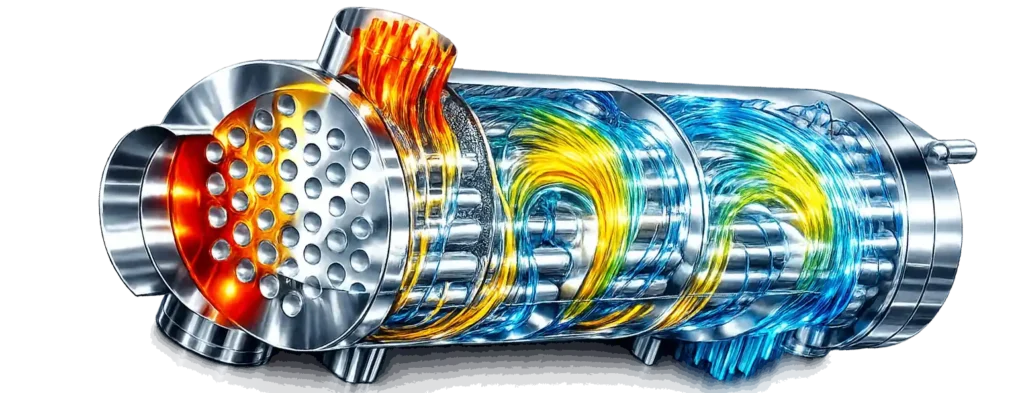
Common heat exchanger types include shell and tube heat exchangers, U-tube exchangers, fixed tube sheet exchangers, floating head exchangers, plate heat exchangers, air cooled heat exchangers, condensers, evaporators, and reboilers. Shell and tube heat exchangers are the most widely used type in industrial applications due to their ability to operate under high pressure and high temperature conditions.
Design considerations include tube vibration, thermal expansion, pressure differential between shell side and tube side, corrosion allowance, fouling factors, and maintenance accessibility. Tube bundle removal, tube replacement, and cleaning methods also influence material selection and exchanger design. The use of Engineered Alloy Materials for Heat Exchanger Industry must consider both thermal performance and mechanical integrity.
3 Tube Side and Shell Side Fluid Environments
Material selection in heat exchangers is primarily determined by tube side and shell side fluid environments. Tube side fluids may include seawater, cooling water, hydrocarbons, acids, caustic solutions, brine, steam, condensate, or process gases. Shell side fluids may include steam, oil, gas, chemical solutions, or cooling water.
Seawater and brine environments require materials with high resistance to chloride corrosion and pitting corrosion. Acidic environments require corrosion resistant alloys. Hydrocarbon service may require materials resistant to hydrogen sulfide and corrosion. Cooling water systems may involve fouling and scaling conditions. The selection of Engineered Alloy Materials for Heat Exchanger Industry must consider corrosion resistance, erosion resistance, temperature resistance, and compatibility with process fluids.
4 Corrosion, Fouling and Flow-Induced Failure Mechanisms
Heat exchanger failures are often caused by corrosion, erosion corrosion, fouling, scaling, tube vibration, and thermal fatigue. Pitting corrosion and crevice corrosion are common in chloride environments such as seawater cooling systems. Erosion corrosion may occur in high velocity fluids or slurry environments. Fouling and scaling reduce heat transfer efficiency and increase pressure drop. Flow-induced vibration may cause tube wear at baffle supports and lead to tube leakage.
Thermal fatigue may occur due to temperature cycling during start-up and shutdown operations. Galvanic corrosion may occur between tubes and tube sheets made of dissimilar materials. Understanding failure mechanisms is important in selecting Engineered Alloy Materials for Heat Exchanger Industry to improve reliability and service life.
5 Material Selection for Tubes, Tube Sheets and Pressure Parts
Material selection in heat exchangers typically focuses on tube materials, tube sheet materials, shell materials, and pressure retaining components. Tubes are usually made from corrosion resistant alloys such as stainless steels, duplex stainless steels, or nickel alloys depending on service environment. Tube sheets are often made from carbon steel with corrosion resistant alloy cladding or solid alloy plates. Shells are usually carbon steel unless corrosion conditions require alloy materials.
Material compatibility between tubes and tube sheets is important to avoid galvanic corrosion and differential thermal expansion problems. The selection of Engineered Alloy Materials for Heat Exchanger Industry must consider corrosion resistance, mechanical strength, thermal expansion, weldability, and fabrication requirements.
6 Stainless Steel, Duplex and Nickel Alloys for Heat Exchanger Service
Common materials used in heat exchangers include austenitic stainless steels such as 304L and 316L, duplex stainless steels such as S31803 and S32205, super duplex stainless steels such as S32750 and S32760, and nickel alloys such as Alloy 625 and Alloy 825. High alloy stainless steels such as 904L and 254SMO are also used in aggressive corrosion environments.
Material selection is often based on chloride concentration, operating temperature, corrosion environment, and required service life. Duplex stainless steels provide higher strength and better resistance to chloride stress corrosion cracking compared to austenitic stainless steels. Nickel alloys are used in highly corrosive environments and high temperature applications. The selection of Engineered Alloy Materials for Heat Exchanger Industry ensures corrosion resistance and long-term operational reliability.
7 Tube Manufacturing, Tube Expansion and Welding Technology
Heat exchanger tubes may be seamless or welded and cold drawn to achieve required dimensional tolerances and surface finish. Tube expansion and tube to tube sheet welding are critical fabrication processes. Tube expansion methods include mechanical rolling and hydraulic expansion. Seal welding may be used to ensure leak tightness between tubes and tube sheets.
Heat treatment, pickling, passivation, and surface cleaning are important to ensure corrosion resistance. Eddy current testing is commonly used for tube inspection. Proper manufacturing and fabrication practices are essential for Engineered Alloy Materials for Heat Exchanger Industry to achieve reliable performance.
8 Heat Exchanger Design Codes and Material Standards
Heat exchangers are designed according to standards such as TEMA standards, ASME Section VIII pressure vessel code, and applicable ASTM or EN material standards. Project specifications issued by EPC contractors or end users also define material requirements, corrosion allowance, inspection requirements, and testing procedures. Compliance with codes and standards ensures that Engineered Alloy Materials for Heat Exchanger Industry meet mechanical design and corrosion resistance requirements.
9 Inspection, Testing and Quality Assurance
Inspection and testing for heat exchanger materials and components typically include PMI, ultrasonic testing, radiographic testing, hydrostatic testing, eddy current testing for tubes, hardness testing, ferrite testing, dimensional inspection, and pressure testing. Tube to tube sheet welds may require dye penetrant or radiographic inspection. Quality assurance procedures ensure material traceability and compliance with project specifications for Engineered Alloy Materials for Heat Exchanger Industry.
10 Material Supply Scope for Heat Exchanger Fabricators and EPC Projects
Material supply for heat exchanger fabrication typically includes tubes, tube sheets, clad plates, forgings, bars, flanges, nozzles, baffles, and structural components. Fabricators require materials with full traceability, inspection documentation, and compliance with project specifications. Integrated supply of Engineered Alloy Materials for Heat Exchanger Industry helps reduce procurement interfaces, improve documentation control, and ensure timely delivery to fabrication workshops and project sites.